

Ageing servers, rising maintenance costs and growing cyber security pressure are pushing many organisations towards the cloud. For the majority of Aboriginal-owned companies and community organisations, the decision carries extra weight. The systems being moved often hold sensitive community information, and the migration needs to serve the community as well as the balance sheet. Cloud migration readiness is the work done before any data moves, and it is what separates a smooth transition from an expensive one.
Understanding Cloud Migration Readiness in Community Organisations
Cloud migration readiness is not a single checklist. It is an honest assessment of whether an organisation, its systems and its people are prepared to operate in the cloud. For community organisations, that assessment also needs to reflect cultural responsibilities and the trust placed in them by the people they serve.
Defining Strategic Alignment and Operational Goals
A cloud migration strategy should begin with outcomes, not technology. Before comparing platforms, it helps to be clear on what the move needs to achieve, whether that is stronger resilience, better remote access for dispersed teams, or lower infrastructure costs. When the goals are defined early, every later decision has something to measure against.
Overcoming Common Risks of On-Premises Legacy Infrastructure
On-premises infrastructure carries hidden risks. End-of-life servers become harder to secure and patch, backups may be untested, and a single hardware failure can interrupt essential services. Moving to the cloud can reduce these risks, but only when the current environment is understood first rather than lifted across unchanged.
Key Pillars of a Comprehensive Cloud Readiness Assessment
A thorough cloud readiness assessment looks across the whole organisation, not just its hardware. Three pillars matter in particular, and each one shapes how safely and smoothly a migration can proceed.
Evaluating Current IT Infrastructure and Application Dependencies
The first pillar is a clear picture of existing infrastructure and the applications that run on it. Servers, storage, network design and connectivity all need review, alongside the dependencies between applications. Understanding these dependencies prevents the disruption that occurs when one workload is moved without its supporting services.
Reviewing Data Security Governance and Compliance Requirements
Data security and governance sit at the heart of any migration for community organisations. This pillar reviews access controls, sensitive information, data ownership and the compliance obligations that apply. For Aboriginal and Torres Strait Islander organisations, it is also where data sovereignty and cultural expectations must be respected, ensuring information is stored and managed in ways the community would endorse.
Assessing Internal Skills: IT Operations and Change Readiness
The final pillar is people. A migration succeeds or fails on whether staff can operate and adopt the new environment. Assessing internal skills, IT operations and appetite for change highlights where training or additional support will be needed before, during and after the move.
A Structured Framework for Assessing Cloud Migration Readiness
This framework turns a cloud migration strategy into action. A practical approach moves through three phases, from a detailed audit to a clear roadmap, so nothing important is left to chance.
Phase 1: Deep Audit of Systems and Interface Mapping
The first phase is a comprehensive audit that documents the current environment in detail, with particular attention to interfaces and integrations. Mapping how systems connect to one another creates the foundation for every decision that follows and reveals the true scope of the work ahead.
Phase 2: Interactive Strategy and Technical Workshops
The second phase brings people together through workshops covering strategy, integration and reporting, and operations, security and networking. These sessions involve the right stakeholders, from senior leaders to technical staff, so the plan reflects both business priorities and technical reality.
Phase 3: Creating the Cloud Migration Roadmap and Architecture Report
The third phase produces a detailed report and cloud migration roadmap. It sets out the proposed architecture, the sequence of the migration, and the transformation and optimisation activities required, giving everyone a shared view of what needs to be done, by whom and by when.
Managing Cloud Migration Costs and Infrastructure Value
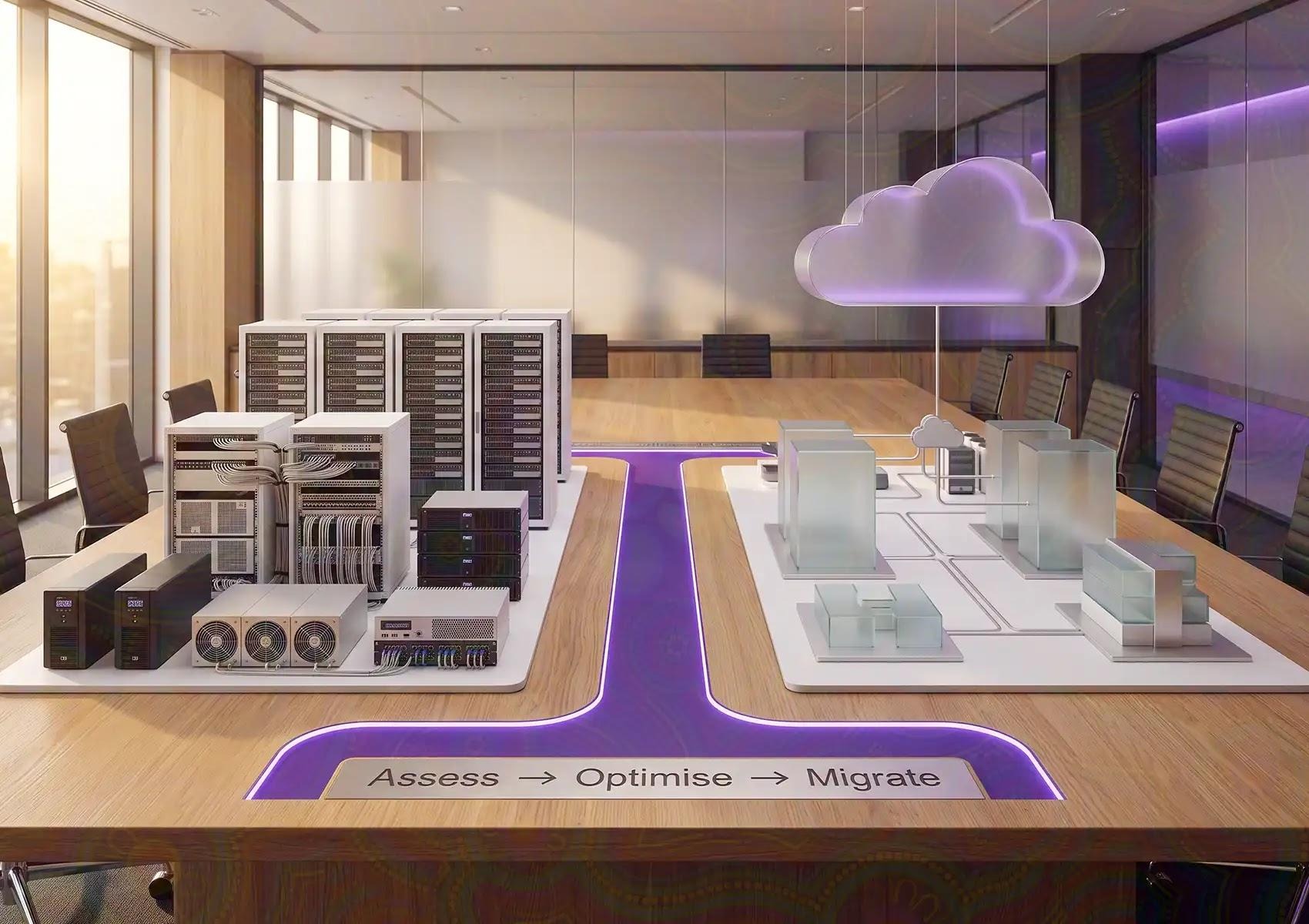
Cloud is not automatically cheaper. Value comes from planning, not from the platform alone, and a sound cloud migration strategy makes the true cost visible before any commitment is made.
Moving from Capital Refresh Cycles to Managed Cloud Operations
Traditional infrastructure ties organisations to expensive hardware refresh cycles every few years. Managed cloud operations shift to a predictable cost model that frees limited budgets from large one-off purchases and reduces the burden of maintaining physical equipment.
Avoiding Cost Blowouts through Proper Workload Rightsizing
Costs climb when workloads are oversized or unused services are left running. Rightsizing each workload to what it genuinely needs, then reviewing usage after go-live, keeps spending under control and ensures the investment continues to deliver value.
Building Purpose-Led Technology Partnerships
Technology decisions of this size are rarely made alone. The right partner brings more than technical skill. They understand the community context and stay involved well beyond go-live.
Choosing a Qualified Partner to Support Your Cloud Journey
Danjoo Business Solutions is a majority Aboriginal-owned, end-to-end IT provider that supports organisations across every stage of their technology lifecycle, including cloud. Accreditation under ISO 9001 for quality management means migrations follow structured, repeatable processes, while ISO 27001 accreditation means data security and governance are handled with rigour. Supply Nation certification reflects a genuine connection to the Aboriginal business community, and through the Kali Program, one per cent of revenue is reinvested back into the community, supporting young people with digital skills and pathways into IT careers.
A thoughtful cloud readiness assessment is the sensible first step, well before any workload moves. If your organisation is weighing up a move to the cloud, we would welcome a conversation about how to shape your cloud migration strategy with confidence and care.