
| Key Takeaways VPS management software removes inconsistency from daily operationsAutomation speeds up provisioning and reduces manual fixesCentralised control helps teams respond fasterStandardised environments reduce support frictionScaling becomes predictable instead of reactive |
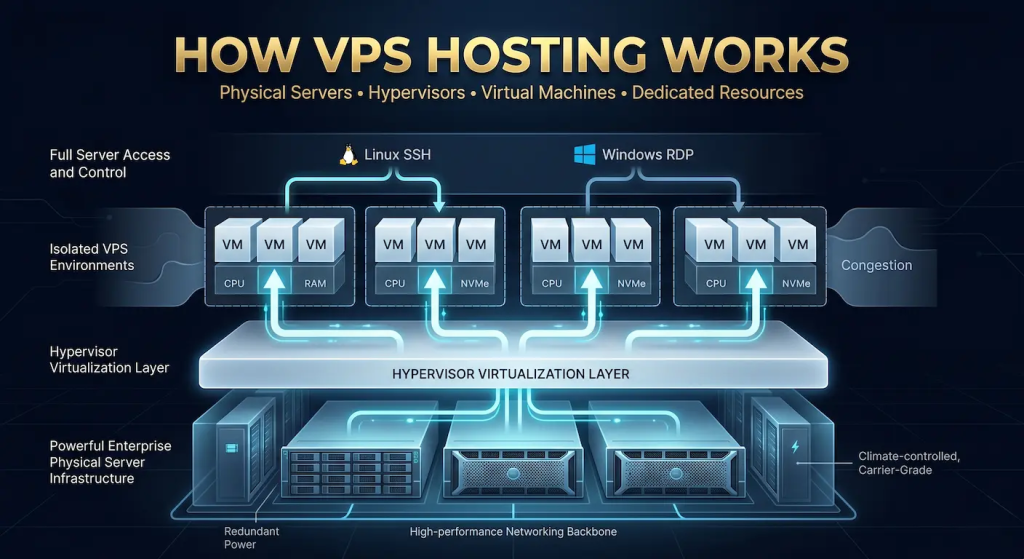
| What is VPS management software? VPS management software is a system that allows hosting providers to provision, manage, and scale virtual private servers using structured workflows, automation, and centralised control. |
Most hosting environments feel efficient when demand stays predictable. Provisioning completes on time, systems respond as expected, and teams rarely question how those workflows actually hold up under pressure.
As request volume increases, the same workflows start showing strain. Provisioning slows during peak demand, routine actions require manual fixes, and similar issues begin to repeat across servers. At that point, the limitation is not capacity. It is the lack of structured execution that makes vps management software essential.
Why do VPS Operations Start Breaking as you scale?
As demand rises, workflows that once felt stable begin to behave inconsistently under load.
Manual steps add delay when requests arrive together, creating provisioning queues and slower recovery cycles. Reliance on individual operators further reduces consistency, because outcomes depend on who executes the task rather than on a defined system.
How does VPS Management Software Standardise Operations?
Standardisation isn’t about restricting flexibility. It’s about ensuring the same action produces the same result every single time.
Consistent provisioning across all VPS instances
Solid VPS management software ensures every server is created using the same logic. The system handles it the same way, whether it’s the first deployment of the day or the hundredth.
Standardised lifecycle management
Backups, suspensions, and recovery actions follow a defined flow. That removes much of the guesswork from daily operations.
Policy-driven execution instead of manual intervention
A good VPS manager shifts control into the system. Instead of asking “who set this up,” you know it followed a defined rule. That alone cuts down a lot of confusion.
Elimination of environment-level inconsistencies
Once everything runs through the same structure, those small differences between servers disappear. That’s where troubleshooting becomes faster and far less frustrating.
How does a VPS Control Panel Improve Response Time?
When something goes wrong, speed matters more than anything else.
A VPS control panel improves response time by providing teams with real-time visibility, faster action execution, and centralised control. It reduces diagnosis time, cuts dashboard switching, and lets operators restart, isolate, or adjust VPS instances immediately, keeping issue resolution quick and focused.
How Does Automation Reduce Workload Without Reducing Control?
Teams often avoid automation because they expect it to reduce visibility. In practice, defined workflows increase control. When the system executes repeat tasks the same way every time, provisioning, recovery, and routine actions follow a consistent path.
This consistency reduces errors and limits avoidable issues. Teams spend less time verifying steps or correcting differences between environments. As demand grows, operations remain stable, allowing teams to manage more without increasing effort.
How does SolusVM help you Standardise and Scale?
SolusVM is built for this exact shift. It takes scattered operations and turns them into a structured, predictable system.
- Automated provisioning that removes setup delays
- Centralised management across your infrastructure
- Consistent environments that reduce support issues
- Scalable control that keeps operations stable as you grow
Scale your VPS Operations Without Increasing Complexity
Most scaling problems don’t come from infrastructure limits. They come from systems that were never designed to handle growth.
When operations rely on manual effort, everything slows down as demand increases. When execution is system-driven, growth becomes easier to manage instead of something teams constantly react to.
SolusVM replaces that manual overhead with consistent provisioning, centralised control, and predictable scaling.
FAQs
What does VPS management software handle in daily operations?
It handles provisioning, monitoring, scaling, and lifecycle management while keeping everything under centralised control.
How does it improve provisioning speed?
It automates deployments and allows multiple VPS instances to be created simultaneously without delays.
Can it reduce operational workload?
Yes. It eliminates repetitive manual tasks and maintains consistent processes, reducing effort and errors.
What role does a VPS control panel play?
It gives visibility and control in one place, helping teams act quickly when something needs attention.
How does it support scaling?
It standardises workflows, automates execution, and ensures systems behave consistently as infrastructure grows.
Why is standardisation important?
It reduces errors, improves reliability, and makes operations easier to manage at scale.