

Cybercriminals now treat small and medium enterprises as the easiest way in. The scale is relentless, with an Australian business filing a cybercrime report every six minutes, and big corporations are no longer the only ones at risk.
Waiting until systems fail is the most expensive strategy available. Understanding cyber threats before they reach your network is how you keep control of your operations, data, and costs.
What Defines Modern Cyber Threats Across Industry Sectors
A cyber threat is not the same as a cyber attack, and the difference shapes how you defend the business. Knowing where the risk sits lets you act early rather than clean up later.
In practical terms, a cyber threat is any malicious act that seeks to damage data, steal intellectual property, or disrupt your digital operations. It represents what could happen when a vulnerability goes unmanaged.
The Threat Triad Model
Security professionals frame it as three connected parts. The threat itself, meaning the potential to compromise the confidentiality, integrity, or availability of your systems. The threat actors, meaning the people or groups behind the intent. The threat environment, meaning the network and systems where that activity plays out.
Threat Versus Attack Distinction
A threat is potential. A cyber attack is that potential made real. The threat is risk on your network, while the attack is the execution that halts production and locks your staff out of the tools they rely on.
Primary Threat Actors Targeting Commercial Infrastructure
Threats do not appear at random. They come from people with clear motives, and each group demands a different response from your business.
Cybercriminals and Organised Crime Syndicates
Organised cybercriminals lead the field. These syndicates chase financial gain through extortion, stolen trade secrets, and ransom demands. They operate like a professional industry.
Hostile Nation State Actors
Hostile nation-state actors operate with deeper resources. They conduct industrial espionage and target critical economic infrastructure for strategic intelligence, often staying hidden for months.
Insider Threats and User Misconfigurations
Insider threats sit closer to home. Current or former staff can abuse legitimate access for reward or revenge, while well-meaning employees open the door through weak configurations and mishandled credentials.
Hacktivists and Opportunistic Intruders
Hacktivists and opportunistic intruders complete the picture. They push political agendas or scan for unpatched software using automated scripts that never sleep.
Major Types of Cyber Threats Disrupting Daily Operations
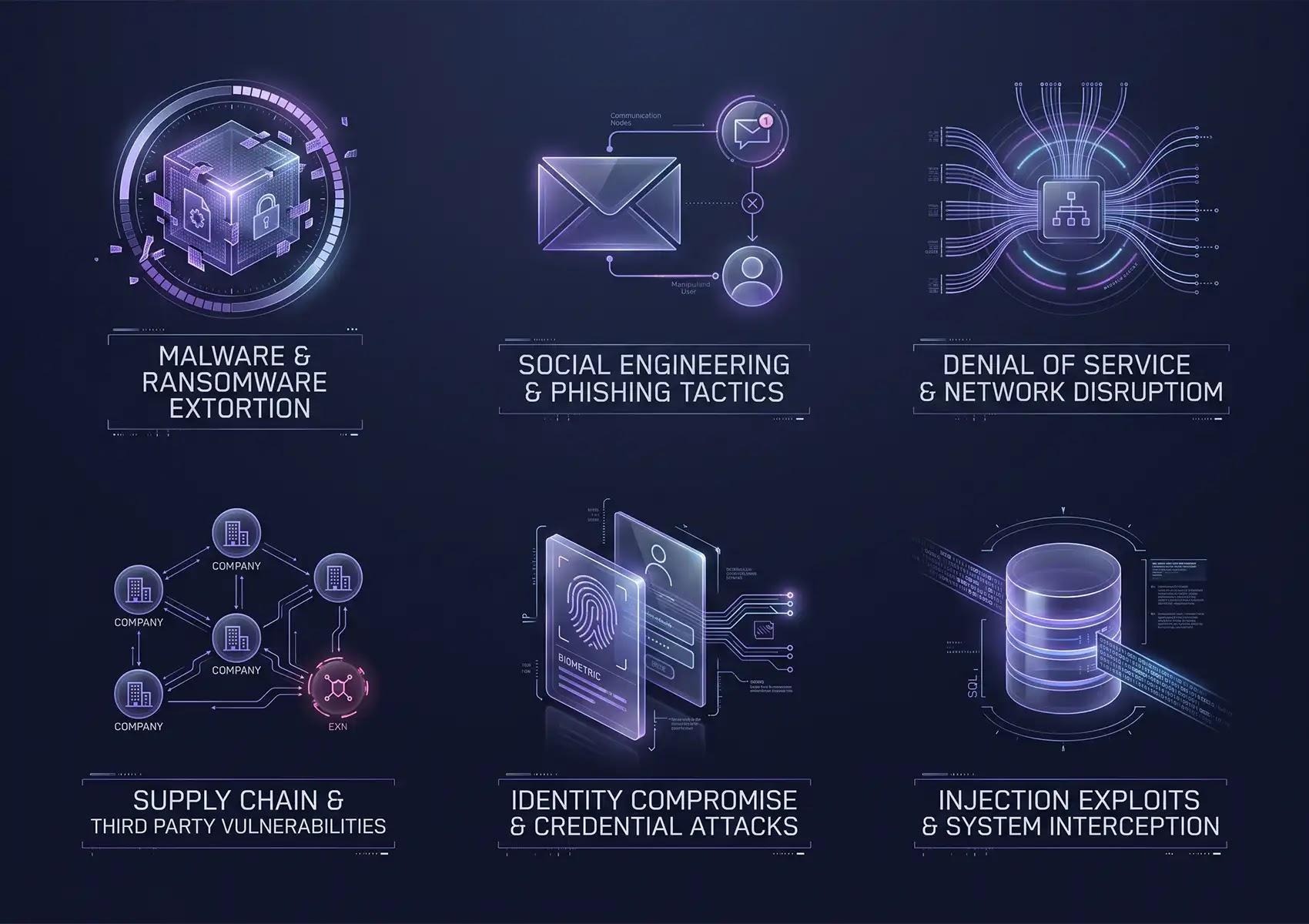
The methods change constantly, but the goal stays the same. Each attack hunts for the gap between what you assume is secure and what actually is.
Malware and Ransomware Extortion
Malware and ransomware remain the most disruptive. Malicious code destroys data or steals credentials, while ransomware locks your files and demands payment under threat of public release.
Social Engineering and Phishing Tactics
Social engineering works on people rather than machines. Phishing, business email compromise, and QR code phishing manipulate staff into handing over access or transferring funds.
Denial of Service and Network Disruption
Denial-of-service attacks flood your systems with automated traffic until legitimate users can no longer access them. Reports of these attacks across Australia rose more than 280 per cent over the past year.
Supply Chain and Third Party Vulnerabilities
Supply chain weaknesses turn trusted vendors into entry points. Attackers compromise one supplier to reach every business connected to it.
Identity Compromise and Credential Attacks
Credential attacks such as password spraying and information-stealing malware harvest logins at scale. Criminals buy stolen credentials cheaply, then use them to walk in unchallenged.
Injection Exploits and System Interception
Attackers can also manipulate databases and applications directly, using methods such as SQL injection to seize data or intercept traffic. Old, unpatched technology lets these threats thrive.
Economic Impact and Financial Consequences for Businesses
A cyber attack is never just a technical event. It lands directly on your balance sheet, and the figures keep climbing. The Australian Signals Directorate reports that a single cybercrime now costs the average small business $56,600, up 14 per cent in a year, and a medium business $97,200.
Operational Downtime Costs
Operational downtime does the first damage. Halted production, idle staff, and unavailable services strip revenue by the hour.
Recovery Expenses and Regulatory Liabilities
Recovery adds a second layer. Remediation work, legal fees, and mandatory breach notifications all carry a cost you never planned for.
Reputational Harm and Partner Erosion
Reputational harm lingers longest. Lost client trust and broken commercial agreements can outlast the technical repair by years.
Essential Defence Strategies for Protecting Corporate Systems
The encouraging news is that the majority of incidents are preventable. A layered defence closes the gaps that threat actors depend on.
Proactive Identity Security
Start with identity. Strong passphrases, multi-factor authentication, and least-privilege access stop stolen credentials from opening every door.
Automated System Maintenance and Patching
Keep systems current. Rapid patching of firmware, operating systems, and applications removes the vulnerabilities attackers scan for daily.
Immutable Off-Site Backups
Protect your recovery. Immutable off-site backups let you restore critical data fast and refuse a ransom demand outright.
Continuous Monitoring and Threat Intelligence
Watch continuously. Automated monitoring, vulnerability scanning, and a local security operations capability isolate active threats before they spread.
Securing Your Business Continuity
Understanding cyber threats matters. Acting on that understanding, every day and without gaps, is what protects your business continuity.
Proactive Environment Management
We at RS3 Solutions shift you from reactive fixes to proactive environment management. Our team monitors, protects, and responds around the clock, so a single cyber attack never gets the chance to take hold.
Perth-Based Operations and Standards Compliance
As an ISO 9001:2015 and ISO/IEC 27001 certified provider based in East Perth, we pair a genuine local Service Desk with security oversight built on strict quality and data protection standards.
Direct Action Integration
Real people, watching your systems and backing your business continuity. One integrated team, so you gain predictable costs, fewer outages, and operations you can rely on. Cyber threats will keep evolving. Your defence should already be one step ahead.